Sarasota · Bradenton · Venice · Lakewood Ranch · Siesta Key · the Gulf Coast
Pool leak detection in Sarasota, FL
¼"/day
…is roughly what a Gulf Coast pool loses to honest evaporation. Losing more than that — refilling constantly, autofill running nonstop, chemicals that won't hold, a water bill that jumped — is a case. Sarasota Pool Leak Detection helps homeowners across Sarasota and Manatee counties find where the water is actually going, using dye testing, pressure testing, and listening equipment instead of guesswork. Describe the loss; finding the leak is the visit's job, not yours.
Pool callback request
(941) 541-6227
Common leak locations
Where Pool Leaks Usually Start
Pool leaks often repeat in the same places. These are the spots a detection visit checks first, using dye, pressure, and listening equipment to narrow the problem without guesswork.
The skimmer throat
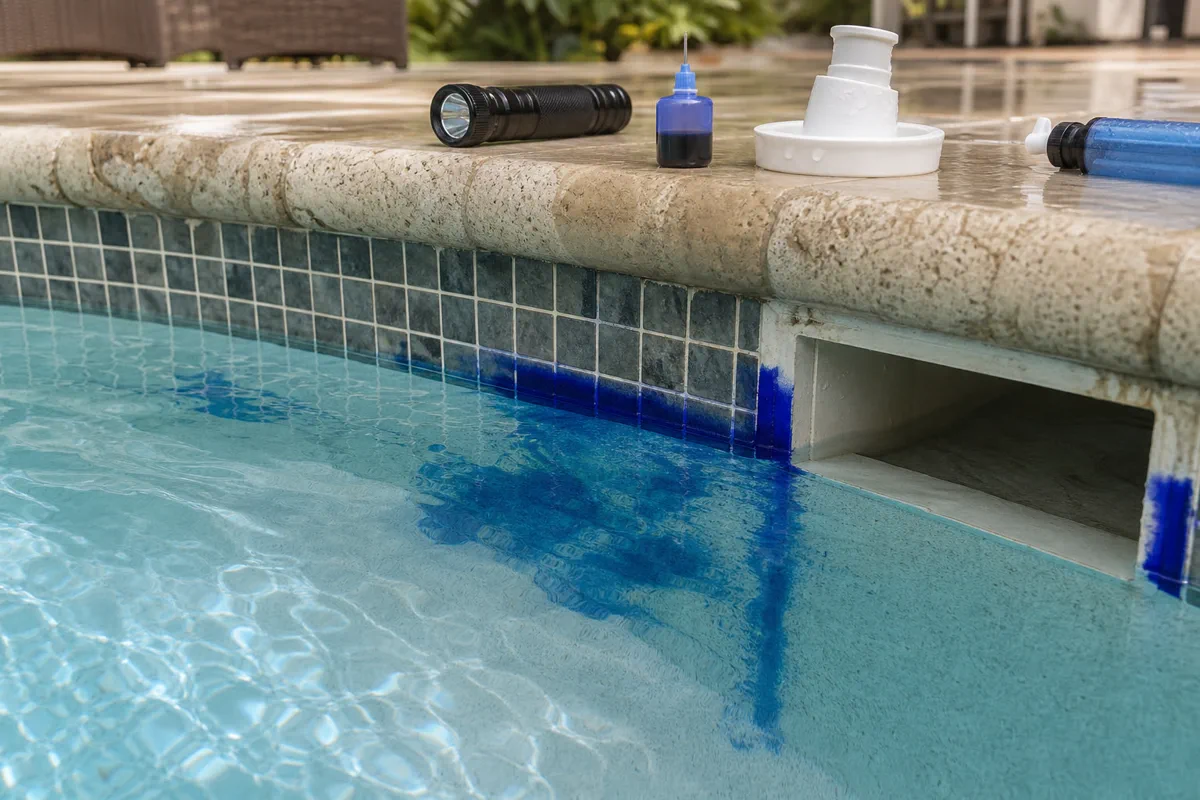
The most common leak in Florida pools: the joint where the plastic skimmer meets the concrete shell, worked loose by ground movement and sun. Often a modest fix once found.
Fittings & the light niche
Returns, the main drain, and the light conduit — penetrations through the shell, each a candidate, each dye-testable in minutes by someone who knows the order to check.
Underground plumbing
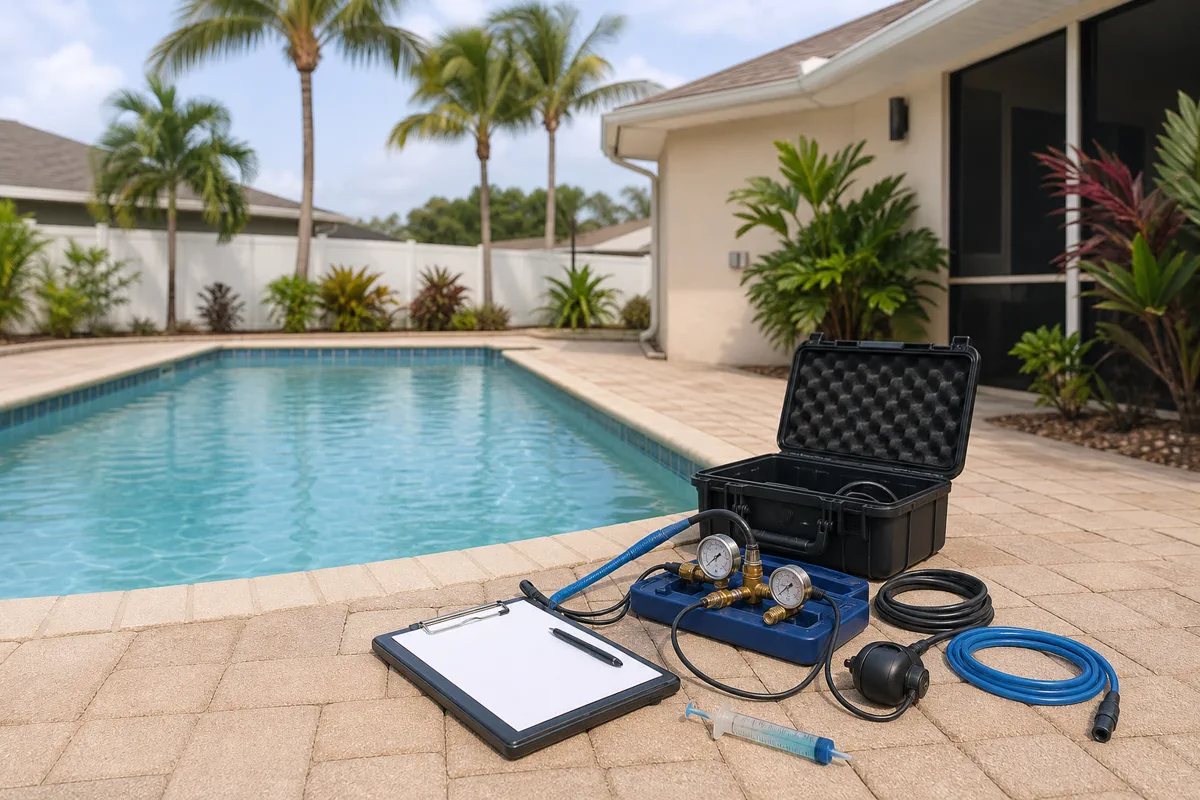
Suction and return runs under the deck. Pressure testing isolates which line loses, and listening equipment pinpoints where — so any digging is surgical, not exploratory.
Structural cracks
Shell cracks that weep, especially around stress points. Dye tells whether a visible crack actually leaks or just looks guilty.
The autofill disguise
Not a leak location — a leak concealer. Autofill devices hide loss while the water bill pays it. A fill line that never rests is a finding in itself.
Sarasota pool conditions
Why Pool Leaks Happen Around Sarasota
Sarasota's pools sit on shifting coastal ground with a high water table — shells and skimmers move, joints work loose, and the same water table that floats empty pools also disguises plumbing leaks by feeding water back in. Add salt systems aging fittings, screened cages concentrating sun on equipment pads, and a housing stock that runs from 1960s Gulf Gate originals to brand-new Lakewood Ranch builds, and steady leak work is just the local condition.
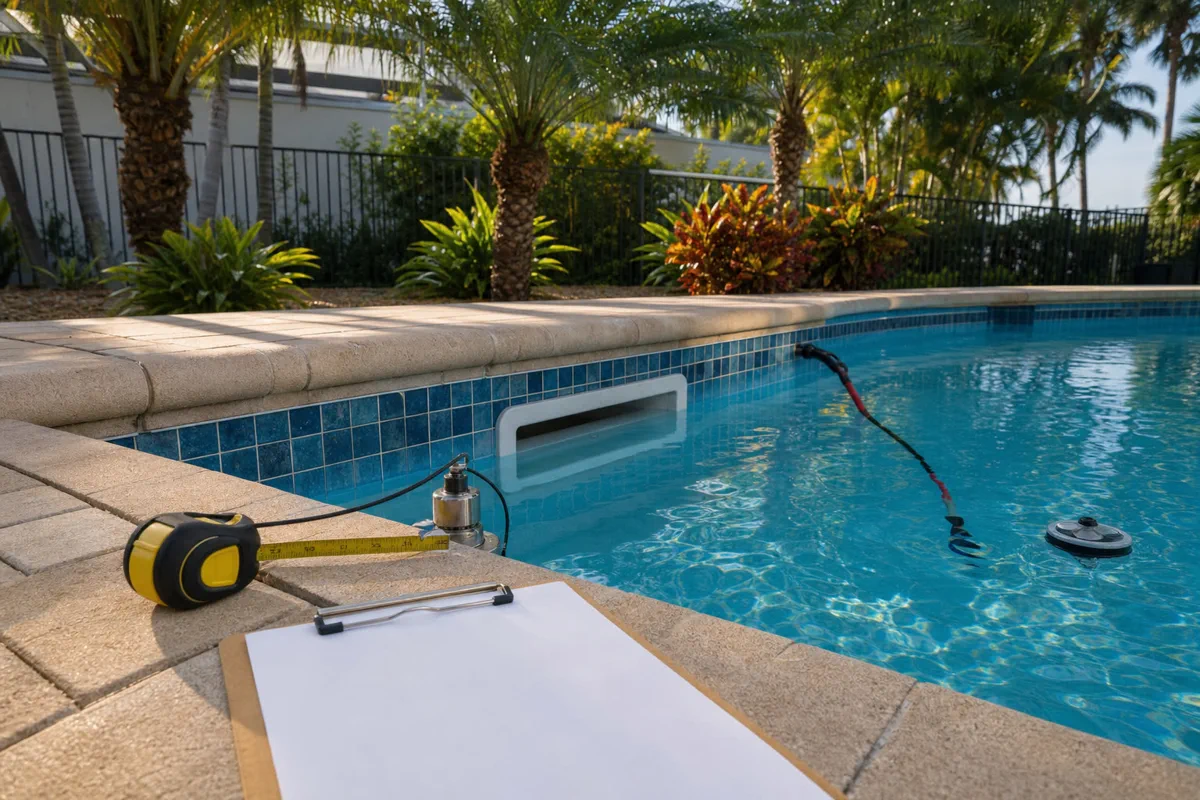
Evaporation runs high here too, which is why a simple comparison can help separate normal water loss from a likely leak. The bucket test page settles the question in 24 hours, free.
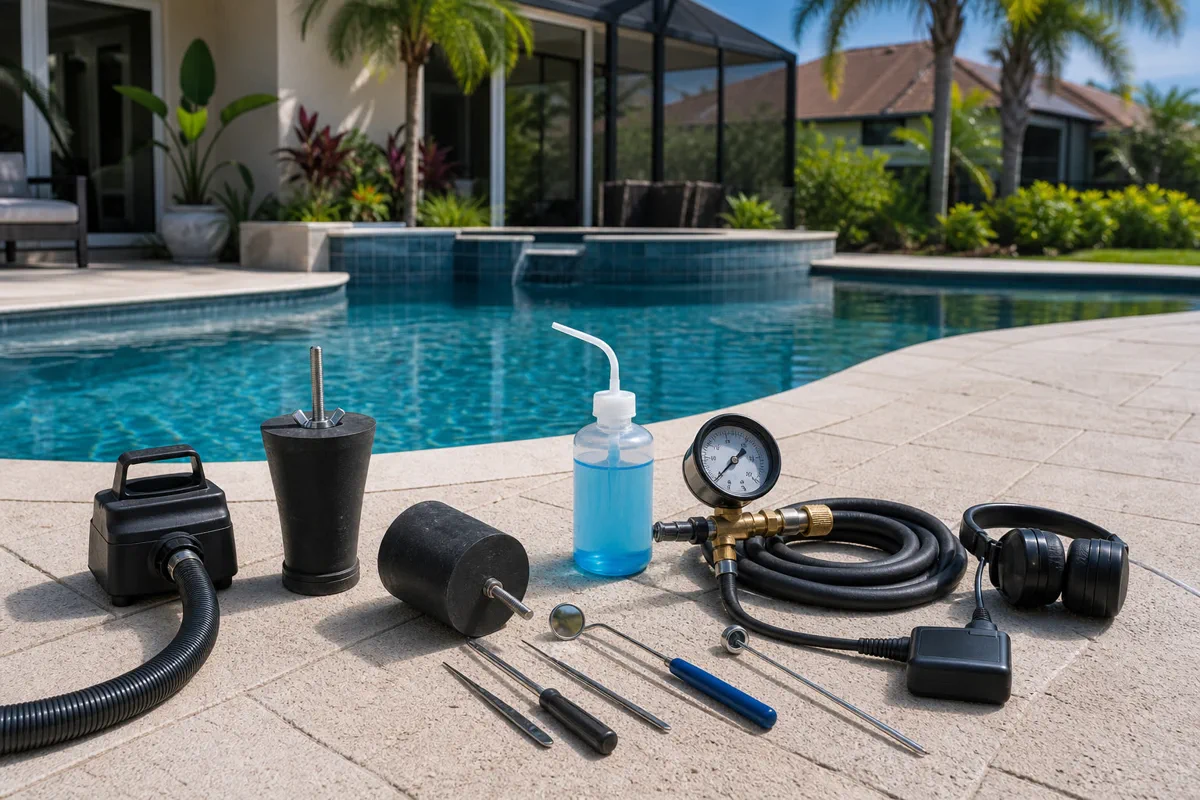
What detection looks at
Sarasota Pool Leak Visual Checks
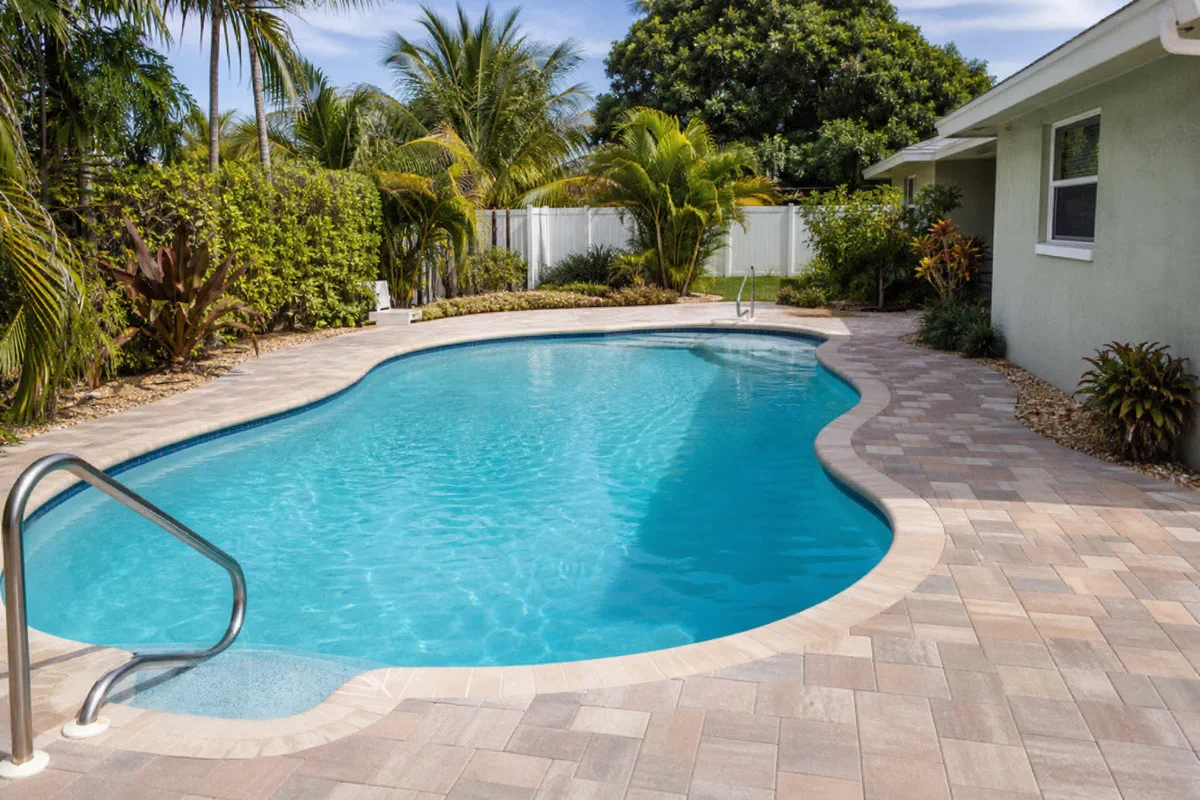
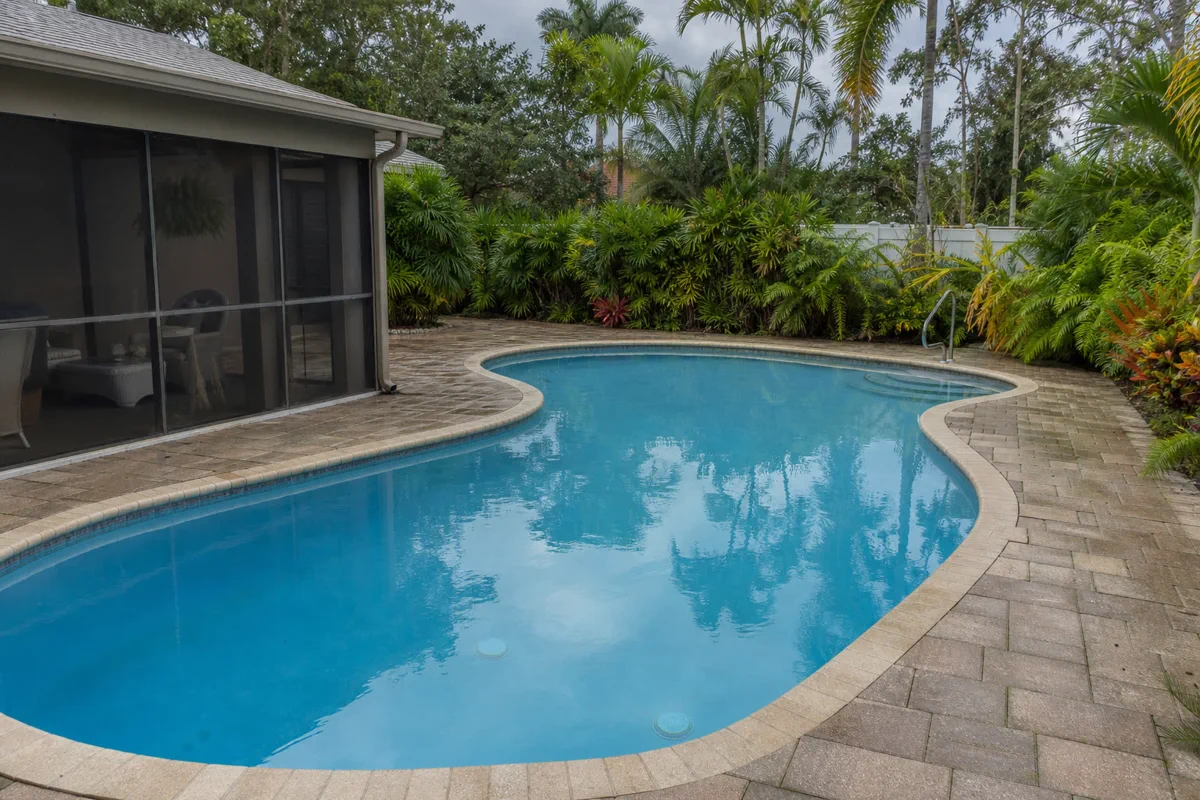
These pool scenes help homeowners describe the symptoms before a callback: water-level change, dye-test areas, plumbing access, and the conditions around decks, fittings, and equipment pads.
Pool Leak Detection FAQs for Sarasota Homeowners
How do I know it's a leak and not just Florida evaporation?
Run the bucket test — the whole method is on the evaporation-or-leak page and takes a bucket, a step, and 24 hours. Gulf Coast pools legitimately evaporate a quarter inch a day and more in summer wind and heat; a pool losing noticeably more than the bucket beside it has a case. If you'd rather skip the test, describe the loss and the call sorts it.
My autofill keeps the level fine. Could I still have a leak?
It's the classic disguise: an autofill device hides the symptom and the water bill pays for it. A constantly running fill line, chemicals that won't hold, or a bill that jumped are autofill-era leak clues. Shutting the autofill off for 24 hours tells the truth fast.
Where do pool leaks usually hide?
The repeat offenders, roughly in order: the skimmer throat where it meets the shell, return and light-niche fittings, underground plumbing runs, and structural cracks. Vinyl pools add liner seams and steps. Detection works that list with dye, pressure, and listening gear instead of guesswork and jackhammers.
Do I have to find the leak before I call?
No — finding it is the entire point of the visit. “Losing about an inch a day” is a complete opening line. The follow-up call asks what matters (how fast, equipment on or off, autofill or not) and books the detection visit.
Is a small leak really worth chasing?
Usually, yes — a modest leak runs thousands of gallons a month, drags chemicals with it, and under a Florida pool it can wash out fines and undermine decks over time. None of that is panic material; it's just why “we'll watch it” tends to cost more than finding it.
What happens after the leak is found?
You get the finding plainly — where it is, what it is, and what the repair conversation looks like — so you can decide the next step with real information. Some fixes are same-visit small (a fitting, a skimmer seal); plumbing and structural repairs get scoped on their own merits.
What Happens After You Call or Send Pool Details
Call or fill out the form with whatever you already know — your city, what the pool is doing, and any water-loss details if you have them. The follow-up call can ask the useful questions and help book the detection visit.
Pool callback request
(941) 541-6227
Next step
Call About Pool Water Loss in Sarasota
If the pool is losing more than normal evaporation, call or use the form. You do not need to find the leak before reaching out.